
Mammal Facts
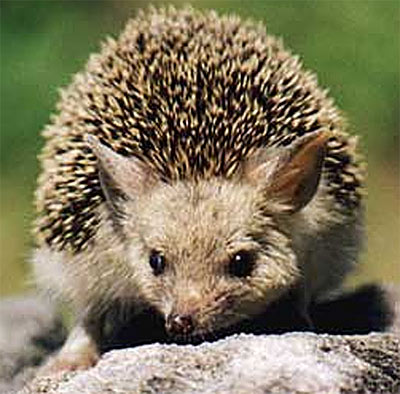
Long-eared desert hedgehog
There are about 5,400 species of mammals in the air and water and on the land.
Some characteristics of mammals are:
- mammary glands
- hair
- diaphragm
- three middle-ear ossicles
- heterodont dentation
- sweat, sebaceous, and scent glands
- four-chambered heart
- large cerebral cortex
Mammal record setters – the big, the bad, and the ugly:
- Fastest – cheetah at 60-70 mph (97-110 kph)
- Slowest – sloths
- Biggest – blue whale
- Biggest on the land – african elephant
- Biggest primate – gorilla
- Biggest fish – whale shark
- Tallest – giraffe
- Smallest – pygmy shrew (1.2-2.7 g) or maybe the bumblebee bat (about 2 g)
- Loudest – blue whale
- Loudest on land – howler monkey
- Smelliest – striped skunk
- Ugliest – aye-aye or maybe the solenodon
- Fatest – blue whale
- Badest – man
- Wickedest – bats
- Venomest – male duckbilled platypus, some shrews, and the solenodon
Some of the orders of mammals are:
- Monotremata (egg-laying marsupials)
- Marsupialia (marsupials) – They have a different take on how pregnancy should be done.
- Insectivora (insectivores)
- Chiroptera (bats)
- Dermoptera (flying lemurs)
- Macroscelidea (elephant shrews)
- Scandentia (tree shrews)
- Primates (primates)
- Xenarthra (anteaters and relatives)
- Pholidota (pangolins)
- Lagomorpha (rabbits, hares, and pikas)
- Rodentia (rodents) – the most populous group making up to 40 percent of the mammals.
- Cetacea (cetaceans)
- Carnivora (carnivores)
- Pinnipedea (seals and sea lions)
- Proboscidea (elephants)
- Tubulidentata (aardvark)
- Hyracoidea (hyraxes)
- Sirenia (dugongs and manatees)
- Perissodactyla (odd-toed hoofed mammals)
- Artiodactyla (even-toed hoofed mammals)