
Aye-aye
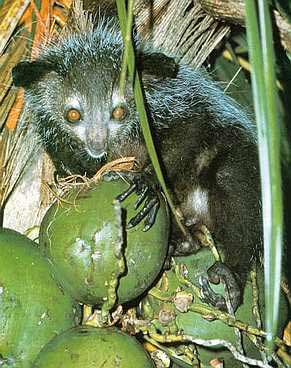
What could this beast be? It is from Madagascar. It has long shaggy dark fur with long white hairs. It has the face of Nosferatu. It was first thought to be a rodent. It is the Aye-aye. It is of course nocturnal and has a long bushy tail and big ears. Poor creature, the native people of Madagascar long considered it an omen of bad luck and tried to kill it on sight and it is now considered a “near threatened” species. The Aye-aye builds nests in several locations with twigs and leaves to sleep and keep their young. They have very long middle fingers which they use to reach into the holes in trees to extract tasty insects. The also tap tap tap with their fingers on the trees and then listen to see if they have stirred any grubs or tasty creatures to eat. They enjoy grooming and sitting still meditating for as long as 2 hours.
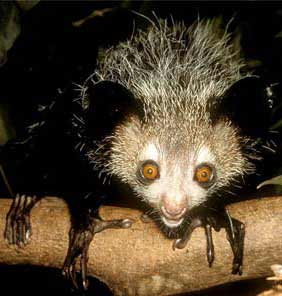
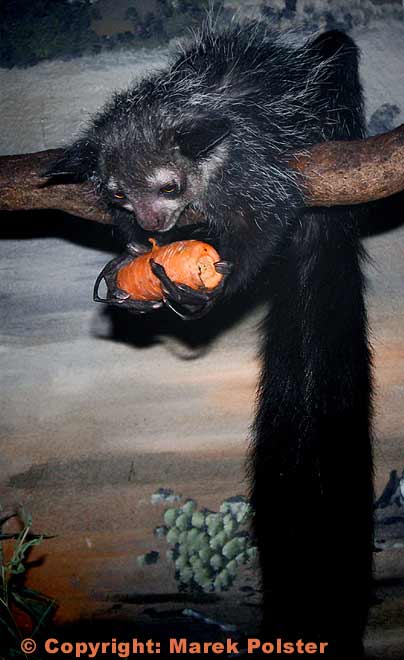
Here you can see the distinctively long fingers that the Aye-aye can use to fish insects out of deep holes. You can also see it’s long bushy tail.
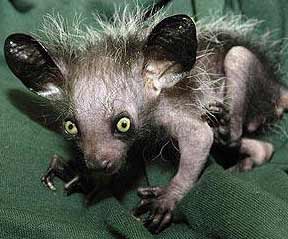
Baby Aye-aye
The baby Aye-aye is born rather underdeveloped and takes some time to mature.
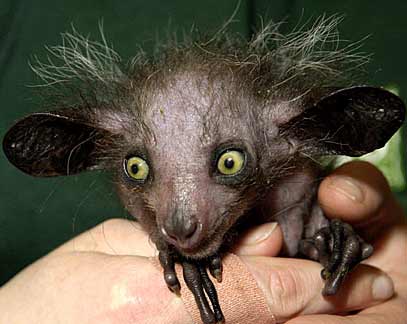
Close-up of baby Aye-aye