
Gorillas – Nomadic Gentle Vegetarians
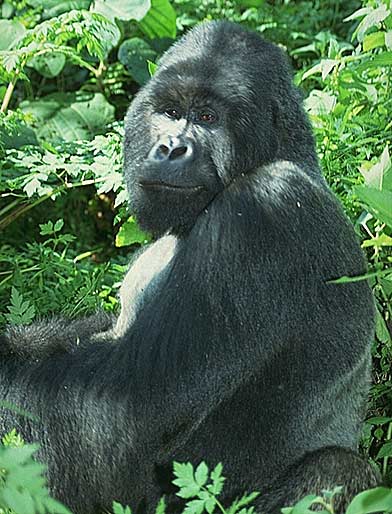
Gorillas are the largest primates weighing up to 430 lbs (200 kgs). They have enormous heads, long arms and broad powerful chests. Although they look quite fierce they are actually gentle, shy, vegetarians. They eat leaves, fruit, seeds, tree bark, plant bulbs, tender plant shoots, flowers and sometimes ants and termites.
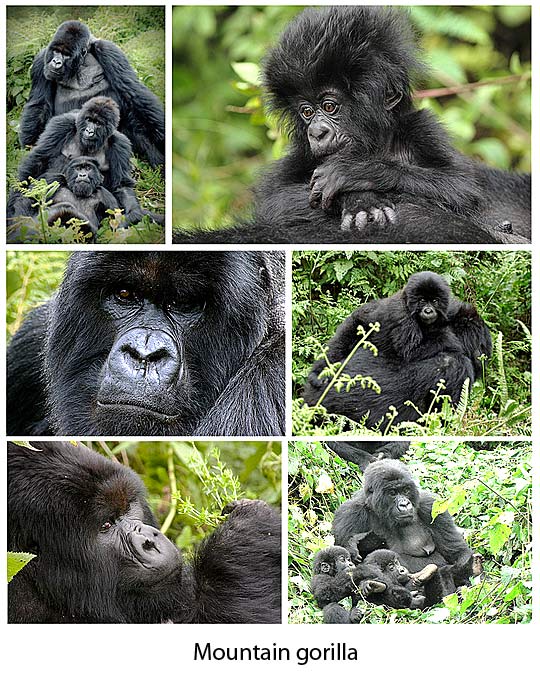
Gorillas live in the many countries across the central part of Africa. The 4-5 different species/subspecies live in parts of Nigeria, Cameroon, Central African Republic, Equatorial Guinea, Gabon, Republic of Congo, Democratic Republic of Congo, Angola, Nigeria, Cameroon, Uganda and Rwanda. Destruction of their habitat is threatening their existence and the mountain gorilla is considered an endangered species.
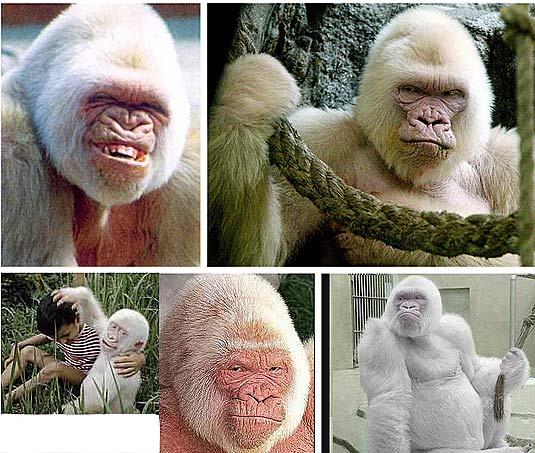
Gorillas have close-knit groups of about 6 or 7 members and even when groups meet and mingle and then subsequently part, each animal tends to remain with its long-term group. An adult male called a silverback, named for the silvery grey hairs on its back it gets as it matures, normally leads each group. The silverbacks can be twice as heavy as the females and serve as the group’s chief protector and defender. When young males mature they go off to form their own group.
Gorillas are nomadic, social daytime foragers, continually wandering through their large home ranges of 10 to 15 square miles, feeding and resting throughout the day. Since they are moving around their range daily, they build new nests each day at dusk to sleep in, constructing them out of branches in a tree or of grasses on the ground.
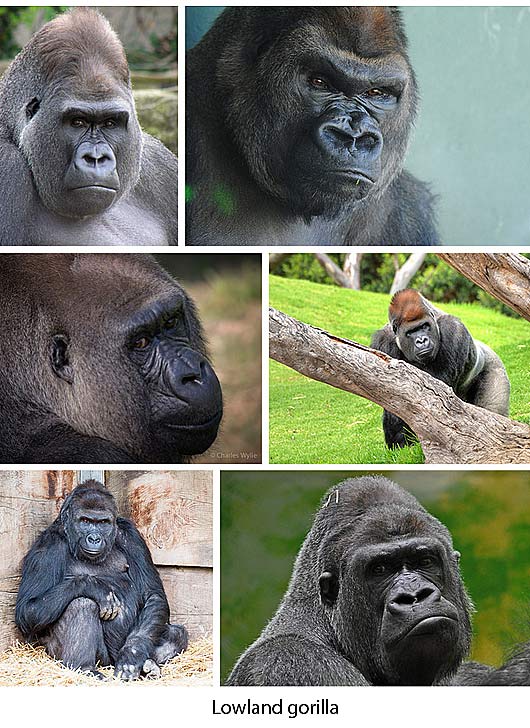
Each group has an established hierarchy, and ritualized behavior such as bluff charges and aggressive displays between males prevents more serious conflict among and between groups. Gorillas scream, grab foliage and stuff it in their mouths, stand erect on their hind legs, tear up and throw plants, drum on the chest with hands or fists, stamp their feet, strike the ground with the palms of their hands and gallop in a mock attack on all fours. This is quite entertaining for us and for them probably but serves its social purpose for the animals as well.