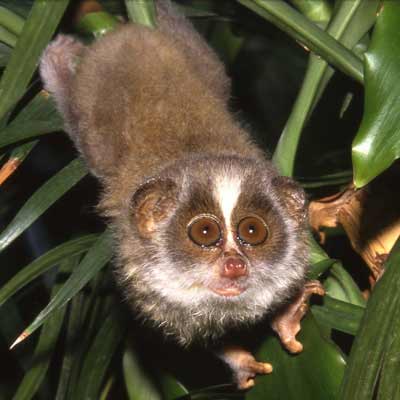
Loris – Slow and Slender, They Like Gum
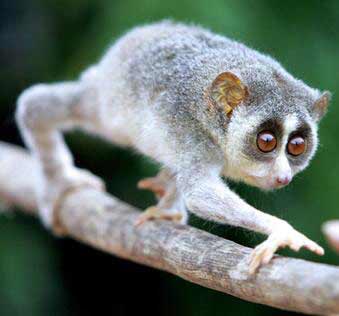
There are grey and red slender lorises, slow lorises, and pygmy slow lorises. The Lorises have four limbs that are about the same length. They generally move slowly or creep although they can move quickly to grab prey. They have a slow rate of metabolism which allows them to digest things that may not be eaten by other animals like the gum of trees. They may live to be 25 or more years old. They have flexible backs and can cling to the limbs of trees for exceptionally long periods of time.
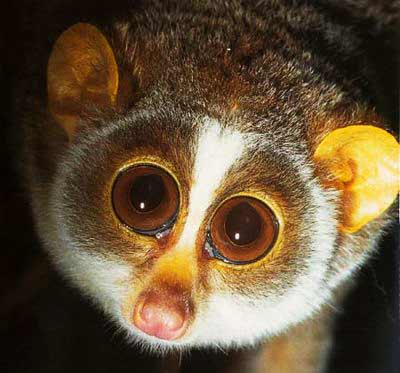
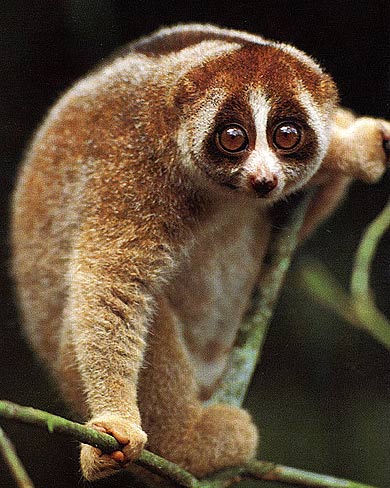
Slow Loris the poisonous primate? That’s right, it is the world’s only poisonous primate. It has venom stored in an elbow patch. If feeling threatened, the slow loris will raise its arms above its head in a diamond shape, take some poison from its elbow patch into its mouth, mix it around, then try to give the foe a toxic bite! Unfortunately, this has not really been to their advantage since the local people catch them and take out their teeth so they can’t bite. The slow loris as you might imagine from the name is not that swift. Local peoples have long been after them for alleged spiritual and medicinal uses.
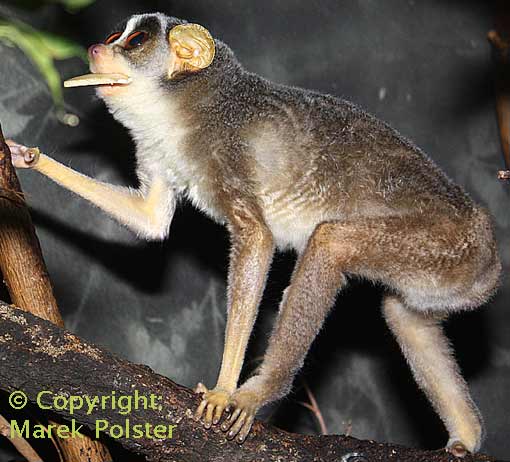
This Red Slender Loris walking shows his long slender equal-length limbs and the absence of a tail.