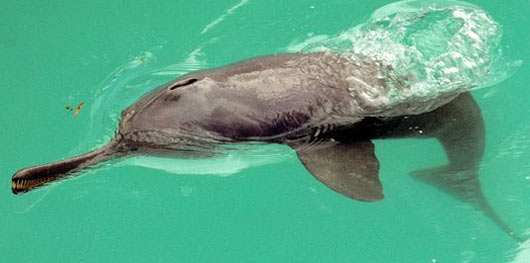
South Asian River Dolphin – Ganges, Indus, Blind Dolphin
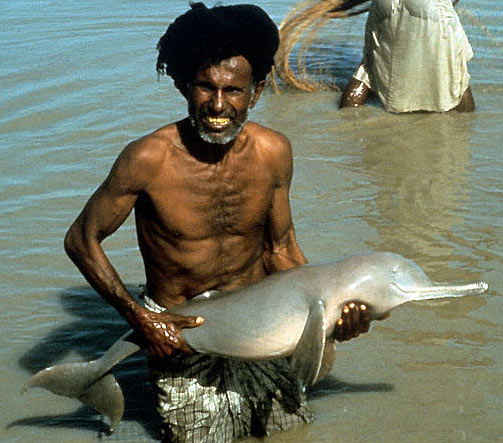
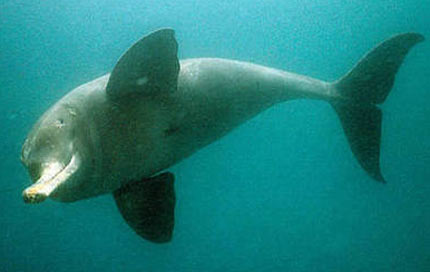
The South Asian river dolphin is an endangered freshwater or river dolphin that can be split into two subspecies based on location, the Ganges river dolphin (which is recognized by India as its national aquatic animal) and the Indus river (Pakistan) dolphin. The South Asian river dolphin has a long pointed nose/snout that thickens at the end, and with teeth that are visible even when its mouth is closed (think of it as not having lips). Their teeth, like those of other dolphins, are squarish bony flat disks.
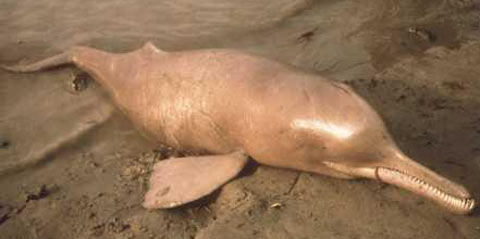
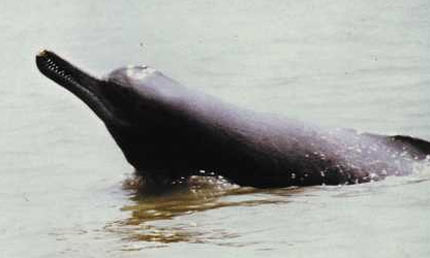
The dolphins have tiny little eyes and lack a crystalline eye lens, and thus they are basically blind and are sometimes called “blind dolphins”, but it’s believed that they posses the ability to echo-locate (sonar), which they use to navigate and hunt. Another strange characteristic of these dolphins is that they swim on their sides, possibly due to their lack of a dorsal fin. Length wise, the South Asian river dolphin ranges from about 6.5 ft to about 8.5 ft (2 m to 2.6 m), with females being a bit larger than males.
They can most commonly be found in Nepal, India, Bangladesh, and Pakistan, usually in water with a reduced flow and a high abundance of prey; prey that includes shrimp, carp, and catfish. This species of dolphin is also known to occasionally breach by jumping out of the water partially or completely and landing on its side. The South Asian river dolphin has received its endangered classification because of increased human usage of the river systems in their range. This human usage has caused some significant degradation of rivers including lower water levels, pollution, and poaching. As a result, various conservation efforts are in place so that this wonderful species can thrive once again.