
Tarsiers – The Big-Eyed, Ancient, Nocturnal Mammal
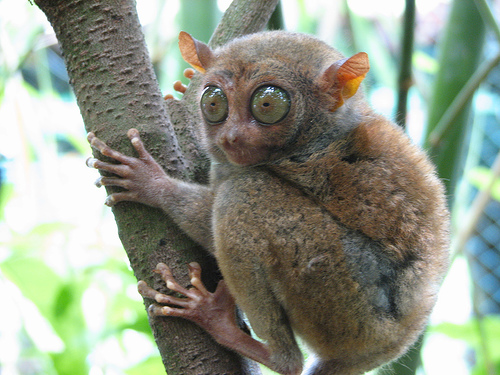
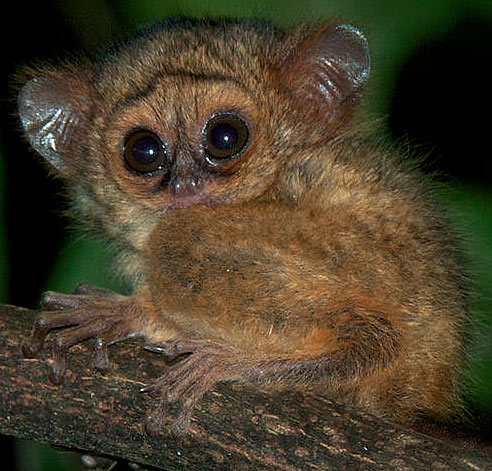
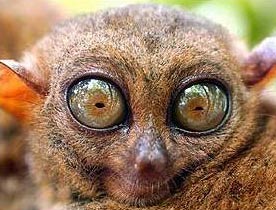
Oh the tarsier is an extraordinary animal. Relative to weight, it has the largest eyes of all the mammals. It is a tree mammal and primate but not a monkey as you will see there are quite a few key differences.
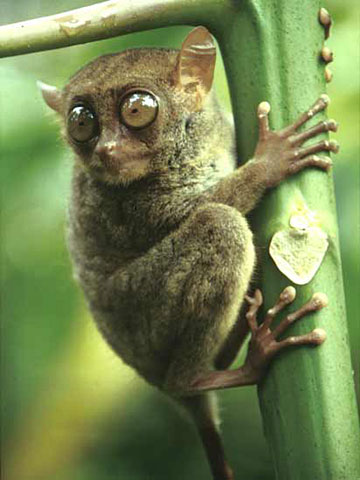
Tarsiers are currently living only on some of the islands of Southeast Asia – the south of the Philippines, Borneo, Sumatra and some of the other Indonesian islands. They have not survived well in captivity or as pets. There are some reserves or sanctuaries where the shy, tiny mammal seems to permit people poking and bothering them during the daylight hours for example in Bohol, Philippines but they probably prefer to cling to the trees in silence.
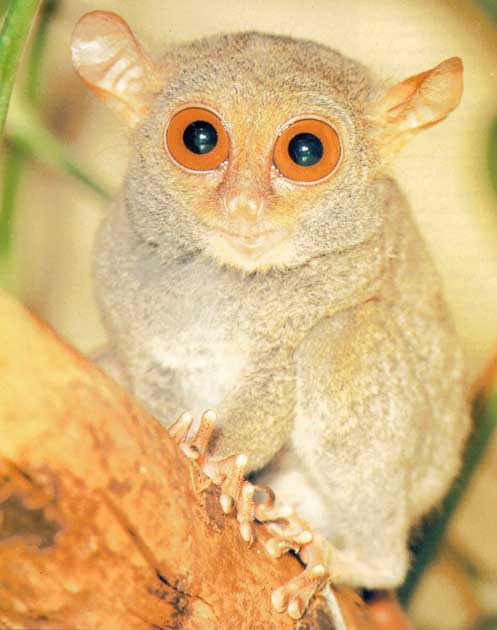
Western Tarsier
The tarsiers, unlike any other primates, completely refuse to eat any plant matter whatsoever. They eat mostly insects but sometimes enjoy birds, crabs, snakes, bats, etc, as long as it is something they can grab and eat its little head, like crickets and grasshoppers for example. They may be eaten themselves by snakes, lizards, owls, and other birds of prey. The hunt may go like this – The hunter waits on its haunches staring with its large eyes. A grasshopper passes by and slowly the tarsier leans in until Wham! it suddenly seizes the insect with both hands and gobbles it up screwing up its tiny face contentedly.
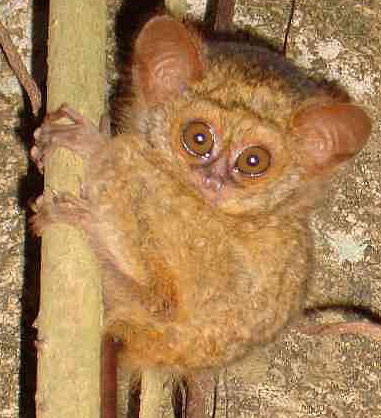
Being nocturnal helps them avoid some predators in the dark night. Alas, there are snakes, birds of prey and other animals that are also stalking in the dark. If a tarsier is attacked by a predator, all of the tarsiers nearby may swarm and attack the predator.
Video of Amazing Large Eyes
Tarsiers do like to sing with a high-pitch voice and in some species the males and females perform duets together. Different species will have different songs and singing styles and that is one way scientists can differentiate between the species.
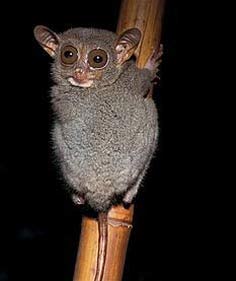
The tarsier’s flexible neck allows its head to swivel around 180 degrees to help it scan for prey or predator. This is necessary as their eyeballs do not rotate. The ears are usually moving around when the animal is awake. They can flatten and roll their ears back and unfurl them again.
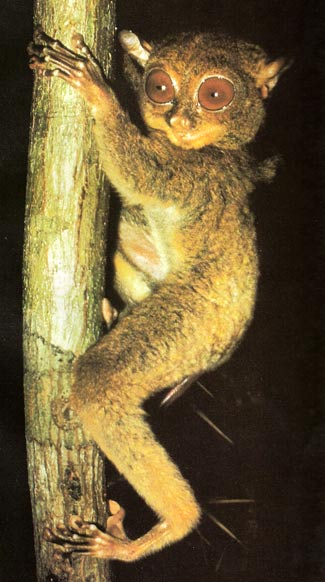
See those legs? The tarsier is an amazing jumper able to jump more than 40 times it’s own body length. The hind legs can be twice the head and body length. In fact, their name comes from their powerful ankle bones – the tarsals. They like to jump and cling to trees.
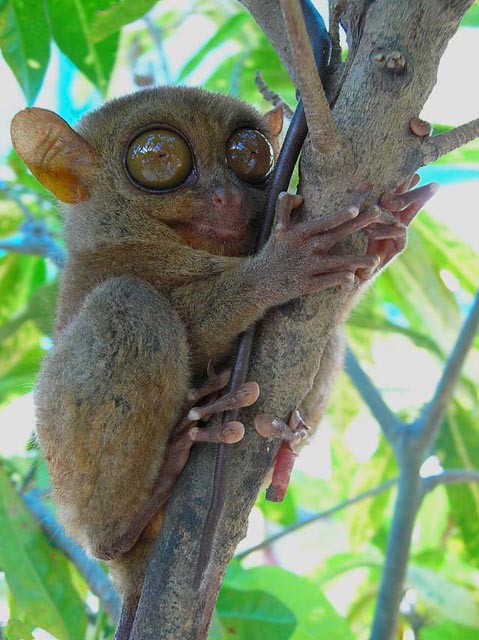
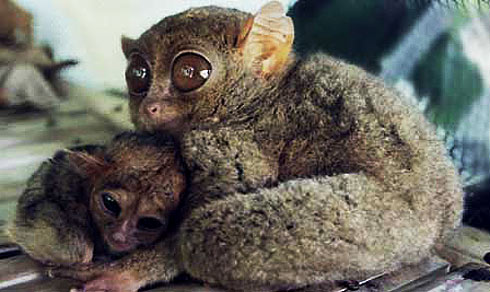
Philippine Tarsier
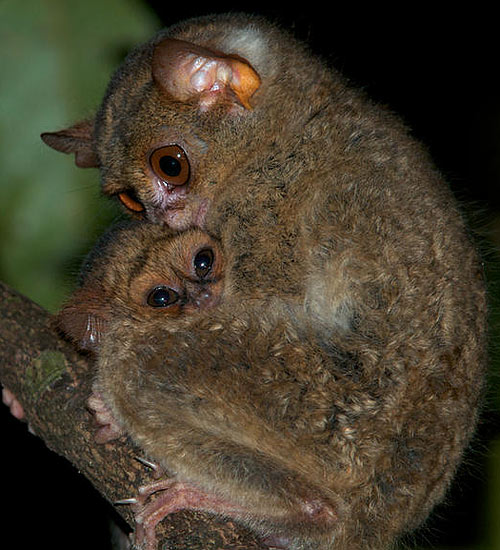
The tarsier has such large eyes because it is a nocturnal hunter and the large eyes help maximize the available light. Their pupils dilate to adjust when little light is available and shrink to tiny pinholes when more light is present. They must not like it when someone takes their picture using a bright flash.
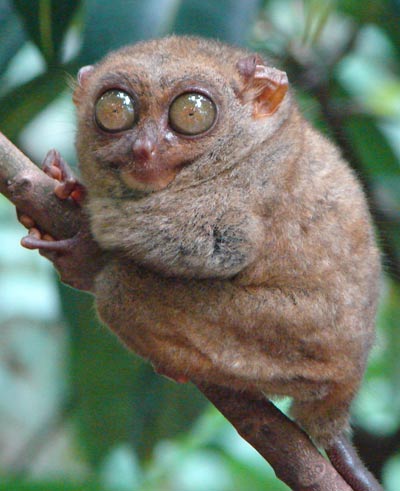
Spectral Tarsier
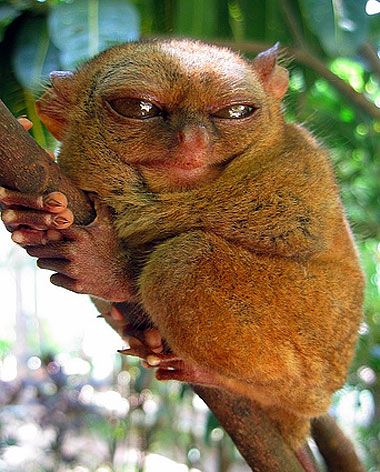
Their fur is grey, gold, ochre, sand-colored or a mix of these colors and very soft. They have long hairless tails and long padded fingers well adapted for arboreal life with anti-skid treads.
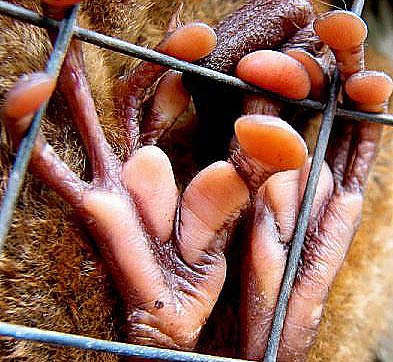
Here is a close-up of the pads on their fingers. Look at those things! Photo Source – Francis Ritualo
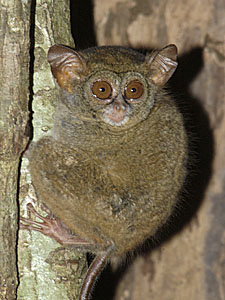
Dian’s tarsier
The fossils of these animals extend back as long as any other primate. They may have been chomping insects (and whatever other creatures might have been living then) as long as 45 million years ago. Their range was once much more extensive and fossils are found in parts of Europe, North America, other parts of Asia, and perhaps in Africa. Now they are limited to islands in Southeast Asia.