
Chameleons – Master of Disguise with Unique Eyes
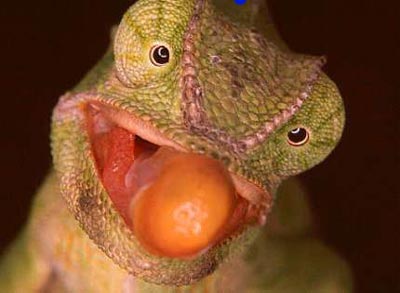
Chameleons have to be the most visual stunning lizards. Some species have it all – horns, pincers, the ability to change colors, eyes that can look in different directions, a tongue twice the length of its body and a curly tail.
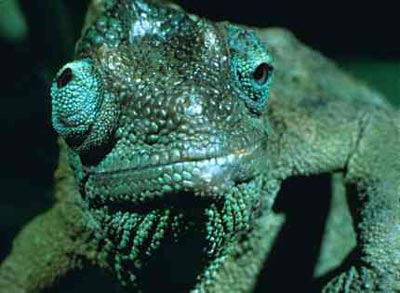
Chameleon looking up there and over there
Chameleons are specialized tree-living lizards. Their bodies are flattened from side to side, and more or less leaf-shaped. They remain still and concealed for long periods of time and wait for their prey to come near. When they move, they do so slowly, and rock their bodies from side to side like a leaf in the wind, fooling predators and prey. Their tails and pincers are well adapted for climbing and balance. The prehensile tail can be used to grab large and small twigs and branches. The tail is also quite heavy and is used to give them great balance. It then handily folds up into a nice tight spiral for easy portability. Also, since the eyes can look all around, up and down, they don’t have to move their heads to keep an eye, or both eyes, on their prey.
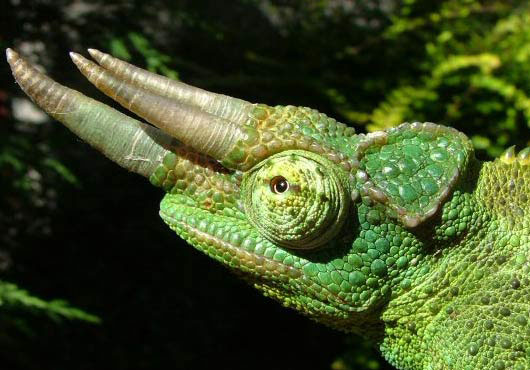
Jackson’s Chameleon
Chameleons are generally solitary and territorial animals, coming together only for breeding. However, mating does occur throughout the year. Some species lay eggs while some give birth to live lizards. Males that come across each other may lock horns, hiss and spar a bit. Males display colors, puff and do head-bobbing dances to attract females. Females that are not pleased may hiss and bite.
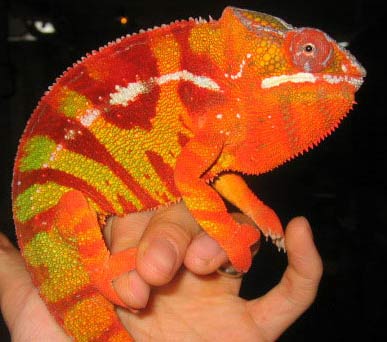
Panther Chameleon – Nice colors and pincer feet.
Chameleons may change their colors for camouflage but their color may also reflect their emotion. Some can only change from shades of brown or green to other shades of brown or green. Others can put on a psychedelic show of colors. When they get excited they may display more colors, stripes or spots. If they are cold or sick they might be more or less pale.
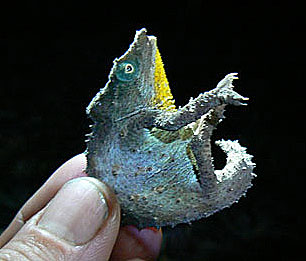
Pygmy Chameleon Mozambique
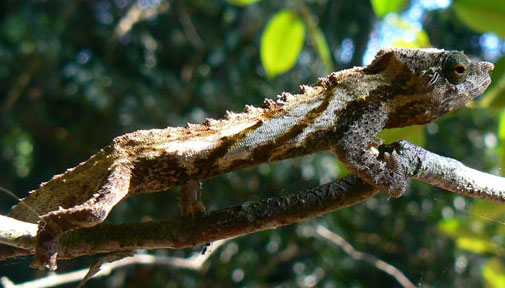
Pygmy Chameleon in Mozambique prentending to be a stick.
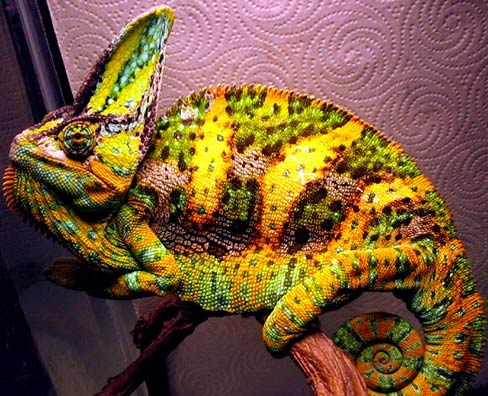
Veiled Chameleon – Nice colors and curly tail
The Veiled Chameleon is known to be aggressive. Males are more brightly colored and larger.
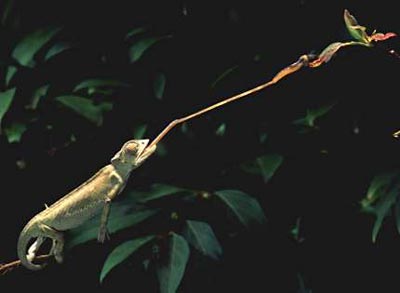
This hunter demonstrates hunting with a tongue much longer than its body
This tongue is really an impressive hunting tool. It not only shoots out at blinding speed but it is sticky and has a suction cup at the end of it. They can snatch some insects or drink water with their tongues. Beware spiders, scorpions or even small birds and mammals, what looks like a leaf on a distant twig, can eat you in a flash with its projectile tongue!
Another handy trick they can perform is to puff up their bodies to look bigger. This may be employed by males guarding their territories.
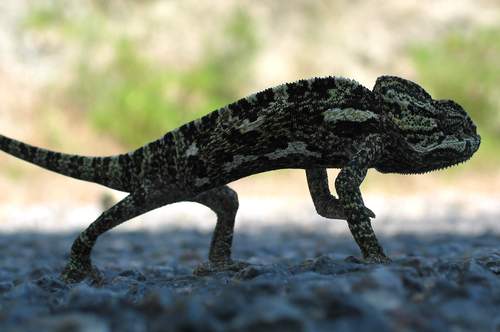
Turkey near Izmir on the move – Source: Volkan Yuksel
There are about 160 different species living in warm, dry or wet climates. Originally from Africa, Madagascar, Southern Asia and Southern Europe they have been introduced to the Americas as well.
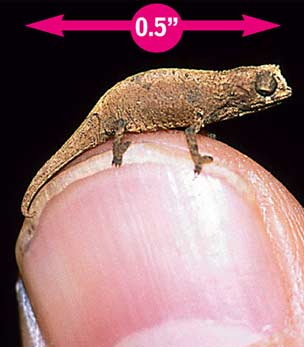
pygmy!